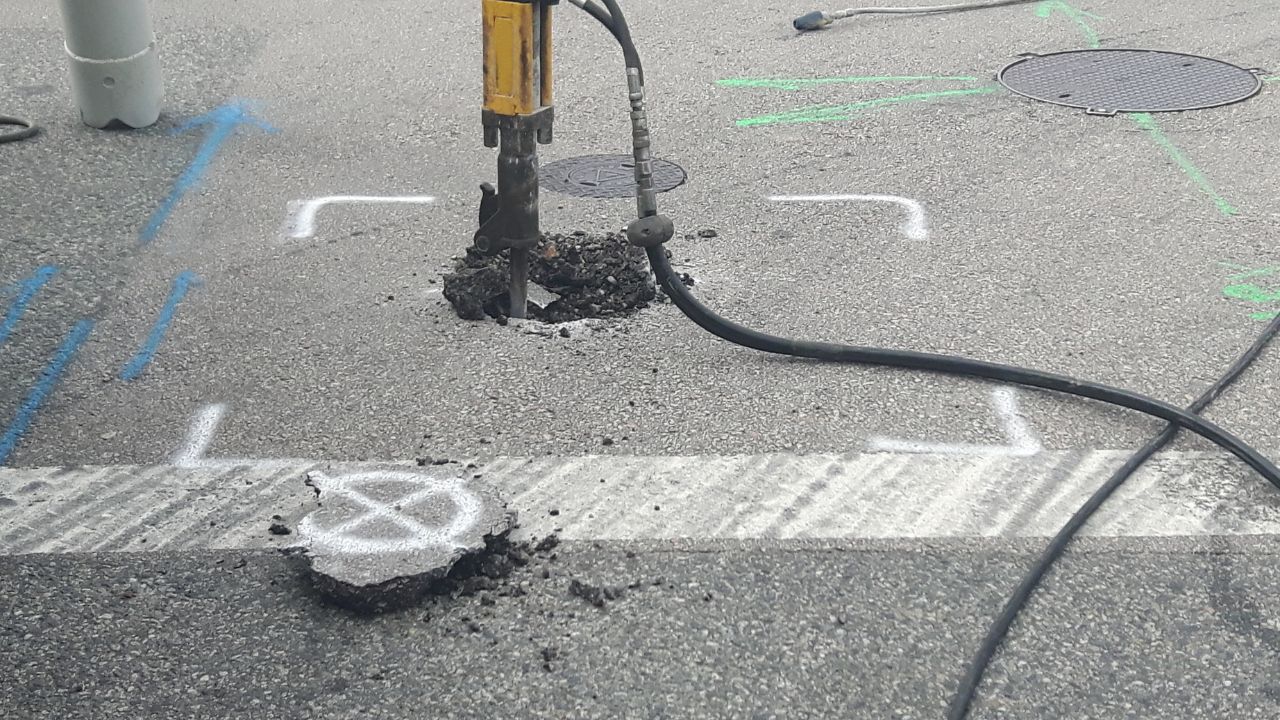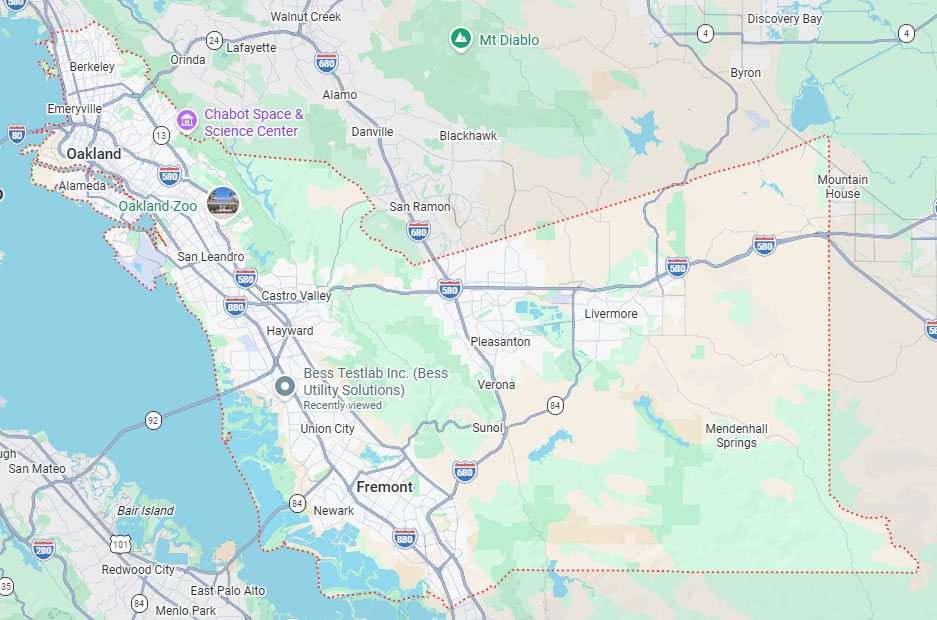
Hayward, CA
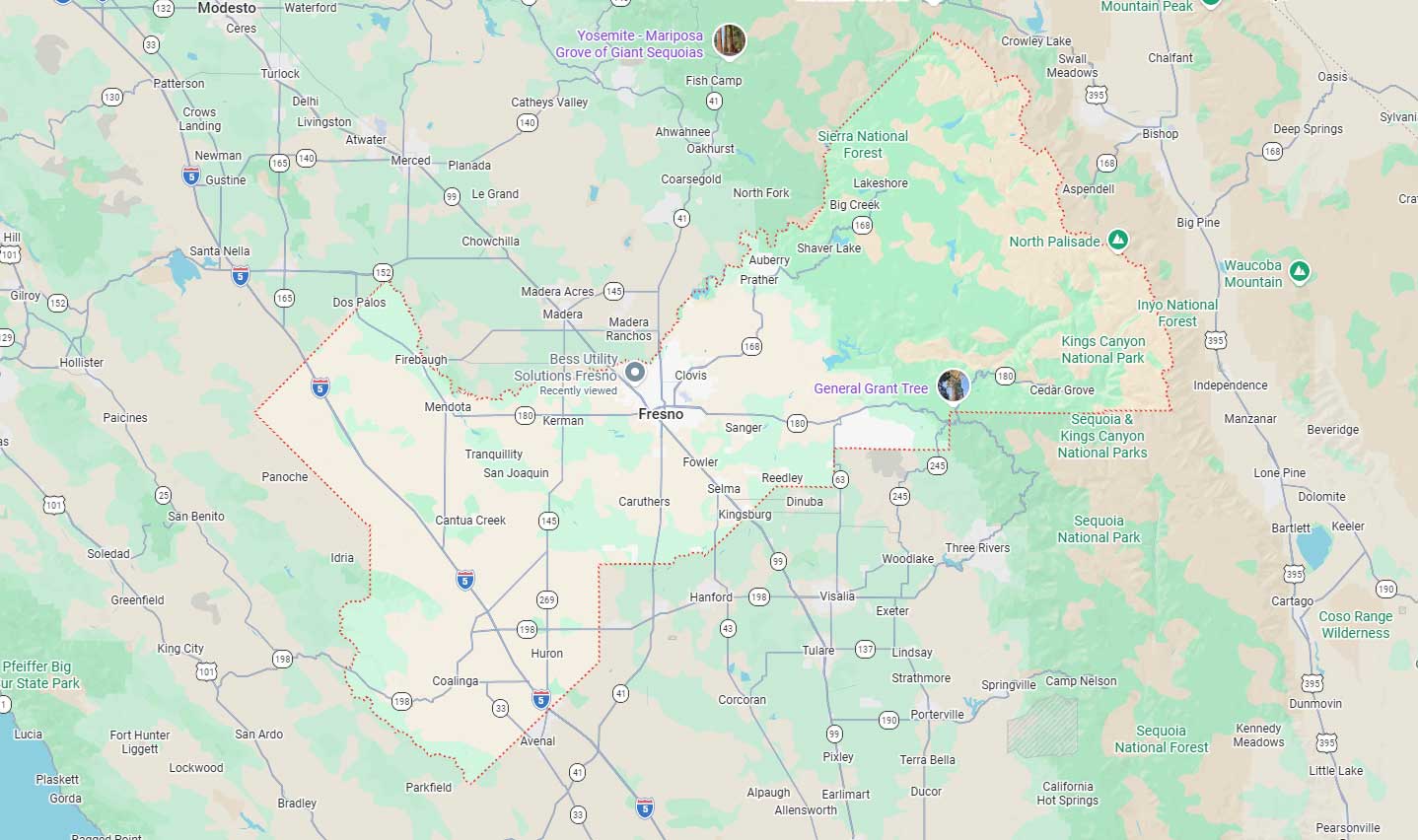
Fresno, CA
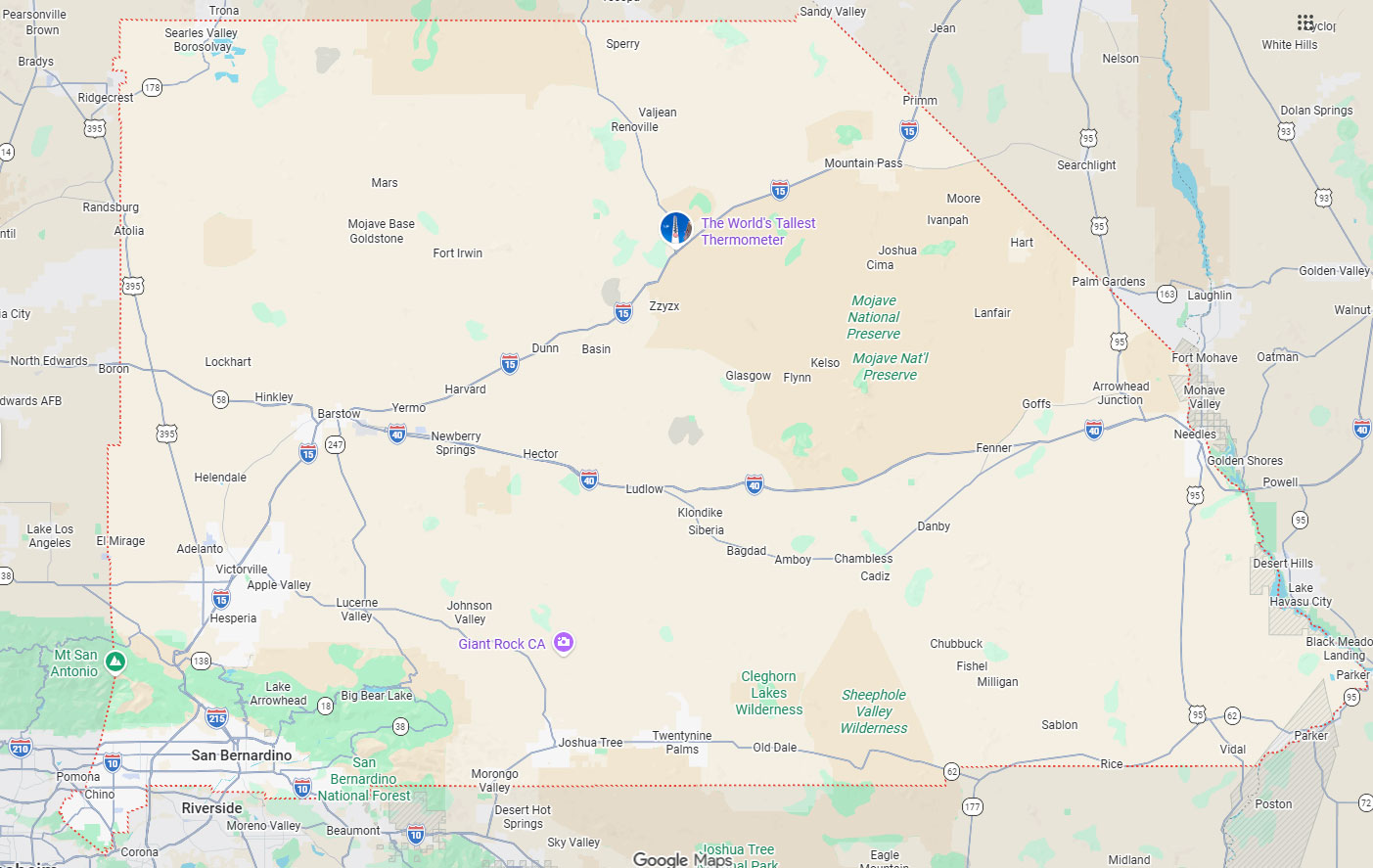
Orange, CA
Sacramento, CA
Phoenix, AZ
Key Takeaways:
Ground Penetrating Radar revolutionized subsurface investigation, but winter conditions fundamentally alter how this technology performs. Frozen ground, snow cover, and temperature extremes create both unexpected advantages and significant challenges. Understanding these dynamics separates successful winter projects from costly failures.
Winter GPR performance depends on complex interactions between soil moisture states, temperature profiles, and equipment calibration. The conventional wisdom that frozen ground hampers detection proves incorrect—fully frozen conditions actually enhance GPR capabilities. However, partially frozen ground, wet snow, and freeze-thaw cycles create the most challenging scenarios. This article examines when GPR excels in winter, when it struggles, and how to integrate it effectively into comprehensive subsurface investigation strategies.
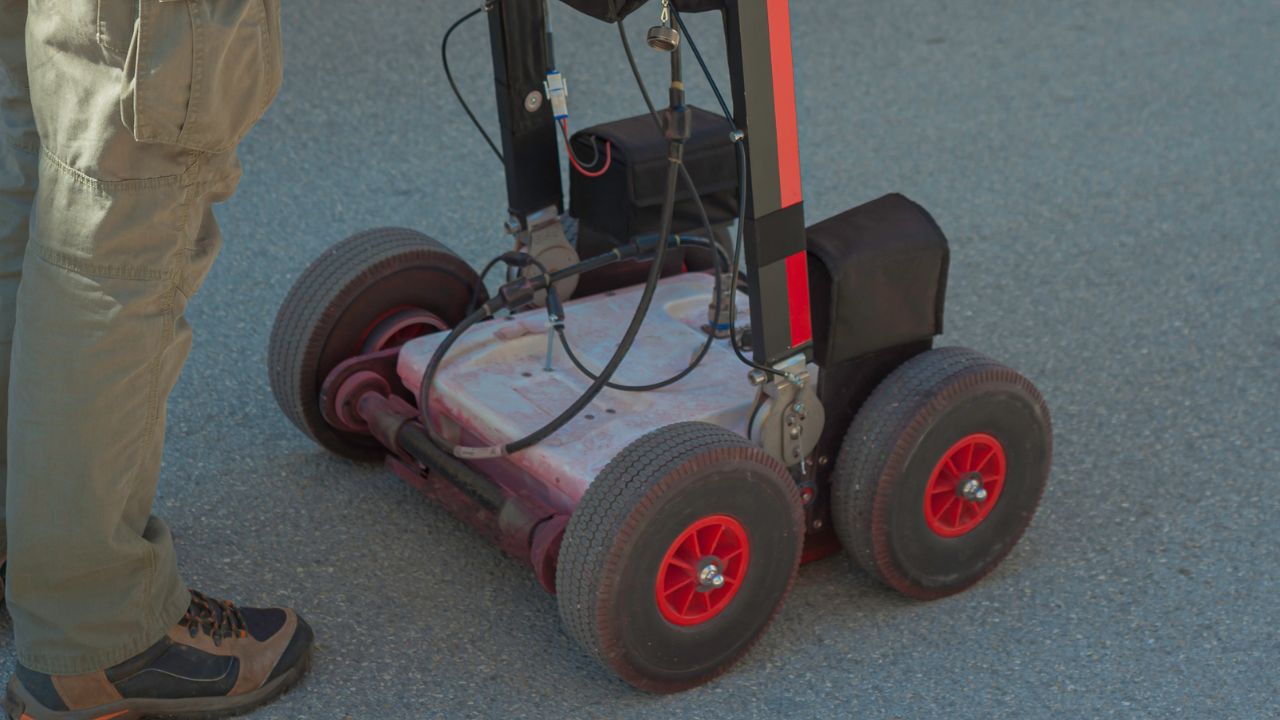
Ground Penetrating Radar transmits electromagnetic pulses into the ground and records reflections from subsurface features. The technology has become a cornerstone of modern utility locating and subsurface investigation.
GPR excels at detecting non-metallic targets that electromagnetic locating cannot find. The technology identifies utilities, embedded conduit, rebar, and post-tension cables. Detailed subsurface mapping capabilities provide comprehensive pictures of underground conditions. Signal reflections create radargrams showing depth, location, and relative size of buried objects. This visualization allows operators to distinguish between different subsurface features and assess their significance before excavation begins.
GPR performance is highly sensitive to subsurface conditions, providing unmatched resolution when conditions are favorable. The technology detects non-metallic utilities invisible to electromagnetic methods. High-resolution mapping of shallow targets creates detailed, interpretable radargrams that guide safe excavation decisions. GPR concrete scanning reveals rebar, post-tension cables, and conduits within slabs, preventing catastrophic damage during cutting and coring operations.
GPR gets selected for strength in specific conditions and unique detection capabilities. The technology excels when non-metallic target detection is required. Projects demanding detailed subsurface visualization benefit from GPR's imaging capabilities. High vertical resolution applications—where precise depth determination matters—favor GPR over other methods. The technology proves particularly valuable in frozen conditions, a counterintuitive advantage most operators don't fully appreciate.
Winter transforms subsurface conditions in ways that dramatically affect electromagnetic signal propagation. Temperature-driven changes to soil properties create both advantages and challenges that demand operational adaptation.
Fully frozen ground significantly enhances GPR performance through a counterintuitive mechanism. Water has high dielectric permittivity (εr ≈ 80), which slows and absorbs radar waves. When water freezes into ice, dielectric permittivity drops dramatically (εr ≈ 3.2). This transformation lowers overall soil dielectric constant and electrical conductivity. Signal energy can be 1.2 to 3.6 times higher in frozen ground compared to thawed ground. Lower electrical conductivity results in less signal noise and higher signal-to-noise ratios, producing cleaner, more interpretable radargrams.
Partially frozen ground presents the opposite scenario—among the most challenging conditions for GPR. A thawed, wet layer over a frozen layer creates strong dielectric contrast. GPR signals reflect strongly off frost lines, potentially masking deeper utilities. High conductivity of wet, unfrozen soil leads to significant signal attenuation. Velocity of GPR waves changes significantly in frozen ground, requiring velocity calibration using Common Midpoint surveys for accurate depth measurements. Without proper calibration, depth estimates can be off by 30-50%.
Thin layers of dry snow or ice remain generally permeable to GPR signals. Thick, wet snow or slush creates serious problems. Wet snow lifts ground-coupled antennas off the surface, reducing energy transmitted into ground. The "ringing" phenomenon—multiple reflections between antenna and snow/ice surface—creates noise that obscures shallow targets. Deep or wet snow should be cleared whenever possible to ensure good antenna coupling. Even thin wet snow can reduce signal penetration by 40-60% compared to direct ground contact.
Frozen ground conditions allow different frequency selections than summer operations. Lower-frequency antennas (250 MHz) take advantage of increased penetration depth in frozen conditions. Higher-frequency antennas (400-900 MHz) suit high-resolution mapping of shallow targets. Equipment requires frequency adjustments based on actual ground conditions, not calendar dates. Battery performance degrades in cold temperatures. Display screens become sluggish. Cable flexibility decreases, affecting antenna coupling. These equipment factors compound environmental challenges, demanding extra operational attention during winter surveys.
Winter GPR accuracy varies more than in any other season. Ground state determines whether operators achieve their best or worst results of the year.
Increased penetration depth represents the primary advantage. Lower signal attenuation allows GPR waves to travel deeper, detecting utilities that summer surveys miss in saturated conditions. Improved signal quality and resolution stem from lower conductivity, producing cleaner radargrams and improved vertical resolution. Fully frozen ground provides the most effective conditions for GPR surveys. Partially frozen or thawed wet soil creates the least effective scenarios. Strong dielectric contrasts at frost lines can mask deeper targets, creating false confidence about subsurface conditions.
GPR delivers reliable winter results under specific conditions. Fully frozen ground maximizes effectiveness. Proper velocity calibration ensures accurate depth measurements. Appropriate frequency antenna selection matches ground conditions. Thin, dry snow or ice cover permits successful surveys. Proper site preparation through snow clearing maintains reliability. GPR for locating buried electrical lines works exceptionally well in frozen conditions when operators understand environmental impacts and adjust methodologies accordingly.
Winter conditions demand higher operator skill levels than summer work. Operators must understand how different conditions affect equipment performance. Adaptation of methodologies to specific daily challenges becomes essential. Proper interpretation requires environmental context that less experienced operators miss. Recognition of when conditions degrade signal quality prevents overconfidence. Knowledge of when to integrate supplementary methods protects against single-method failures. Experienced operators recognize frost line reflections, distinguish ringing effects from actual targets, and adjust gain settings for frozen ground conditions—skills that come only with winter-specific training and experience.
Winter GPR faces specific limitations that operators must recognize to avoid dangerous assumptions about subsurface conditions.
Thawed, wet soil reduces effectiveness significantly even in winter. Partially frozen ground with wet layers over frozen layers creates the most challenging scenarios. High conductivity soil leads to rapid signal attenuation regardless of surface temperature. Conditions with freeze-thaw cycles present the most difficult operational environment. Clay-rich soils remain problematic even when frozen. Saturated conditions at depth reduce penetration even when surface soil is frozen solid.
Wet snow or slush creates problematic conditions that negate frozen ground advantages. Thick, wet snow lifts antennas off the ground surface, breaking the coupling essential for energy transfer. Multiple reflections from snow/ice surfaces create ringing effects that dominate shallow readings. Signal noise obscures targets in the critical 0-3 foot depth range where most utilities run. Deicing salts increase soil conductivity dramatically, reducing penetration depth by 50-70% in treated areas. Road salt contamination creates blind zones extending 10-15 feet from pavement edges, exactly where utility services typically enter properties.
GPR struggles when frost lines create strong reflections that mask deeper utilities. Reduced clarity in partially frozen conditions makes target identification ambiguous. Challenges with real-time interpretation emerge when ringing effects dominate returns. Difficulty increases when wet, unfrozen soil at depth creates high attenuation despite frozen surface layers. Transition zones between frozen and thawed ground create particularly confusing data. Operators see strong returns but can't determine if signals represent utilities or just soil property boundaries.
Winter conditions change the relative effectiveness of different subsurface investigation technologies. Method selection must account for actual ground conditions, not seasonal averages.
GPR excels in fully frozen conditions where electromagnetic locating struggles. Non-metallic target detection remains GPR's domain regardless of season. Dry, frozen ground provides ideal conditions where GPR outperforms EM methods significantly. Better penetration depth in frozen conditions extends GPR's detection range. However, this advantage reverses in wet or partially frozen conditions when EM locating becomes more reliable.
In challenging conditions—partially frozen ground or significant electronic interference—GPR must be paired with other methods. Electromagnetic locating provides more complete pictures when combined with GPR. Modern approaches use synergistic combinations of GPR, EM locating, and vacuum excavation. Single-method approaches prove far less accurate than multi-sensor systems. Technology combinations create robust systems more reliable than any individual method. The question isn't which technology to use, but how to integrate multiple technologies effectively.
GPR performs poorly in partially frozen ground conditions. Areas with significant electronic interference reduce effectiveness regardless of ground state. Thick, wet snow or slush conditions negate frozen ground advantages. Situations with thawed wet layers over frozen layers create ambiguous, unreliable data. High clay content soils remain problematic even when frozen. When these conditions exist, alternative methods or delayed surveys often provide better results than forcing GPR surveys under unfavorable circumstances.
Effective winter GPR use requires specific preparation, operational adjustments, and interpretation frameworks that differ from summer protocols.
Clear deep or wet snow from survey areas to ensure good antenna coupling. Remove thick, wet snow to prevent antenna lift-off effects. Snow clearing eliminates ringing effects that obscure targets. Direct ground contact ensures optimal signal transmission. Site preparation takes longer in winter but determines survey success. Areas with compacted snow or ice layers may require mechanical removal. Chemical decimals should be avoided—salt contamination persists for weeks and degrades GPR performance more than ice.
Calibrate velocity for frozen ground conditions—velocity changes by 30-40% from thawed conditions. Use lower-frequency antennas (250 MHz) for increased penetration in frozen ground. Deploy higher-frequency antennas (400-900 MHz) for high-resolution shallow target mapping when resolution matters more than depth. Adjust scanning parameters based on actual freeze state, not assumptions. Increase gain settings to compensate for frozen ground's faster signal velocity. Reduce scan speed to allow more time for weak returns to register. These adjustments seem minor but determine whether operators detect utilities or create dangerous false confidence.
Consider the freeze state when interpreting results—frozen versus partially frozen creates completely different signal behaviors. Account for faster signal velocity in frozen ground during depth calculations. Recognize frost line reflections that mask deeper targets. Understand relationship between ground conditions and signal quality. Interpret data with awareness of ringing effects from snow/ice. Never assume summer interpretation rules apply in winter. Strong returns may indicate frost boundaries rather than utilities. Weak returns may represent deep utilities with good detectability in frozen ground that would be invisible in summer. Context determines meaning.
Concrete scanning represents GPR's most reliable winter application. Concrete properties remain relatively stable through temperature changes, unlike soil conditions.
GPR detects rebar within concrete regardless of surface temperature. Post-tension cables show clearly in winter scans. Embedded conduit locations map accurately. Internal concrete structure becomes visible through GPR imaging. High-resolution imaging of shallow embedded elements works as well in January as July. Concrete's consistent density and moisture content don't experience the dramatic seasonal changes that affect soil scanning. This stability makes concrete scanning GPR's most predictable winter application.
GPR prevents damage to critical structural elements hidden within concrete. The technology identifies hazards before cutting or coring operations begin. Risk reduction around post-tension cables becomes critical during winter renovations when schedule pressure tempts contractors to skip scanning. GPR provides necessary subsurface intelligence for safe operations. Winter renovation projects often run on compressed schedules, increasing pressure to work quickly. GPR scanning takes minutes but prevents disasters that halt projects for weeks.
High-resolution mapping capabilities identify precise locations of critical elements. Cleaner radargrams in stable conditions improve target identification. Improved vertical resolution allows precise depth determination essential for saw depth settings. Enhanced signal quality aids accurate detection regardless of outdoor temperature. Concrete scanning provides the most consistent, reliable GPR results available during winter months. When soil conditions make ground surveys questionable, concrete scanning maintains full reliability.
Over-reliance on any single technology creates risk. Winter conditions amplify these risks when operators don't recognize GPR's limitations.
Frost lines create false reflections that mask deeper utilities. Operators see strong returns and assume they've found everything, missing utilities below frost boundaries. Ringing effects obscure actual targets in shallow depths where most utilities run. Partially frozen conditions create ambiguous data that looks clear but isn't. Velocity miscalibration leads to incorrect depth measurements—utilities appear at 3 feet but actually run at 5 feet. Excavators dig confidently at 4 feet and strike lines that GPR "didn't detect."
Single-method approaches prove significantly less reliable than multi-sensor systems. Traditional one-size-fits-all approaches fail in challenging winter conditions. GPR effectiveness wanes in wet snow, slush, and partially frozen ground—exactly the conditions operators encounter most frequently. Over-reliance on GPR creates false confidence. Operators assume clear scans mean no utilities, but environmental conditions may have prevented detection. This overconfidence leads to strikes that comprehensive multi-method approaches would prevent.
Treat GPR as preliminary in partially frozen conditions. When significant ringing effects appear in data, verification becomes mandatory. During freeze-thaw cycle periods, conditions change faster than survey schedules. When electronic interference is significant, GPR reliability decreases. Before vacuum excavation verification, all GPR findings remain preliminary regardless of apparent data quality. Strong GPR data provides valuable intelligence but never eliminates the need for physical verification when consequences of error are high.
GPR appropriateness depends on specific site conditions, not calendar dates. December frozen ground differs fundamentally from December freeze-thaw conditions.
Fully frozen ground conditions create ideal GPR environments. Minimal snow or ice cover allows proper antenna coupling. Dry, frozen soil conditions maximize signal penetration. Areas requiring non-metallic utility detection favor GPR regardless of season. Sites where penetration depth advantage provides value justify GPR deployment. Concrete scanning applications remain reliable through all winter conditions. When these conditions exist, GPR provides exceptional value and accuracy exceeding summer performance.
EM locating proves reliable for tracing conductive lines in wet or thawed soil. Vacuum excavation provides definitive, non-destructive verification essential before major excavation. Multi-sensor approaches become mandatory in challenging conditions. GPS/GIS mapping supplements field technologies with permanent documentation. Digital as-builts provide a comprehensive understanding of subsurface infrastructure. Risk of strikes can be reduced by 70-85% with multi-sensor workflows. Moving from traditional single-method to modern multi-sensor approaches dramatically reduces winter strike risk while improving schedule reliability.
Organizations must commit to systematic, technology-driven workflows. Processes require detection, verification, and documentation—not single-method dependence. Understanding the science behind how conditions affect equipment becomes essential. Flexible, multi-faceted strategies enable winter success. Adaptation of methodologies to specific daily challenges separates successful programs from those suffering repeated winter strikes. Risk tolerance determines verification requirements. Contact experienced professionals to assess specific project conditions and design appropriate investigation strategies.
Winter GPR success requires understanding both technology capabilities and environmental impacts. Neither factor alone determines outcomes—their interaction defines results.
Fully frozen ground creates ideal conditions for GPR—better than summer in many cases. Technology enables deeper and clearer signal penetration than wet, thawed summer soils. Dielectric property changes upon freezing enhance performance dramatically. Signal energy reaches 1.2 to 3.6 times higher levels in frozen versus thawed ground. However, winter presents both challenges and unique advantages. Operators must distinguish between fully frozen ground (advantageous) and partially frozen conditions (challenging). This distinction determines whether winter provides GPR's best or worst performance.
Clear snow whenever possible to maintain antenna coupling. Perform velocity calibration for accurate depth measurements—frozen ground velocity differs 30-40% from summer values. Select appropriate frequencies for actual conditions, not seasonal defaults. Understand how different conditions affect equipment beyond simple temperature effects. Adapt methodologies to specific daily challenges rather than following rigid protocols. Proper planning transforms winter from an obstacle into an advantage for GPR surveys.
Integration of multiple technologies forms the cornerstone of modern winter locating programs. Synergistic use of GPR, EM locating, and vacuum excavation creates robust systems far more accurate and reliable than any single method. GPS/GIS mapping and digital as-builts supplement field technologies with permanent documentation. Systematic, technology-driven workflows prevent strikes. No single magic bullet exists—success requires multi-technology approaches. Reducing utility strikes means adopting comprehensive workflows, not finding perfect individual solutions. Winter's challenges demand integrated approaches that leverage each technology's strengths while compensating for limitations.
Winter GPR surveys deliver exceptional results when operators understand performance dynamics and integrate appropriate verification methods. Bess Utility Solutions combines advanced GPR technology with comprehensive multi-sensor approaches designed specifically for winter conditions, ensuring accurate subsurface intelligence regardless of ground state or weather challenges.
Don't let winter conditions create uncertainty about what lies below. Contact Bess Utility Solutions today for professional GPR services, electromagnetic locating, vacuum excavation verification, and integrated subsurface investigation strategies that maintain the highest accuracy standards through the coldest months. Your winter project success depends on knowing not just if GPR works, but when and how to use it effectively.