Hayward, CA
Fresno, CA
Orange, CA
Sacramento, CA
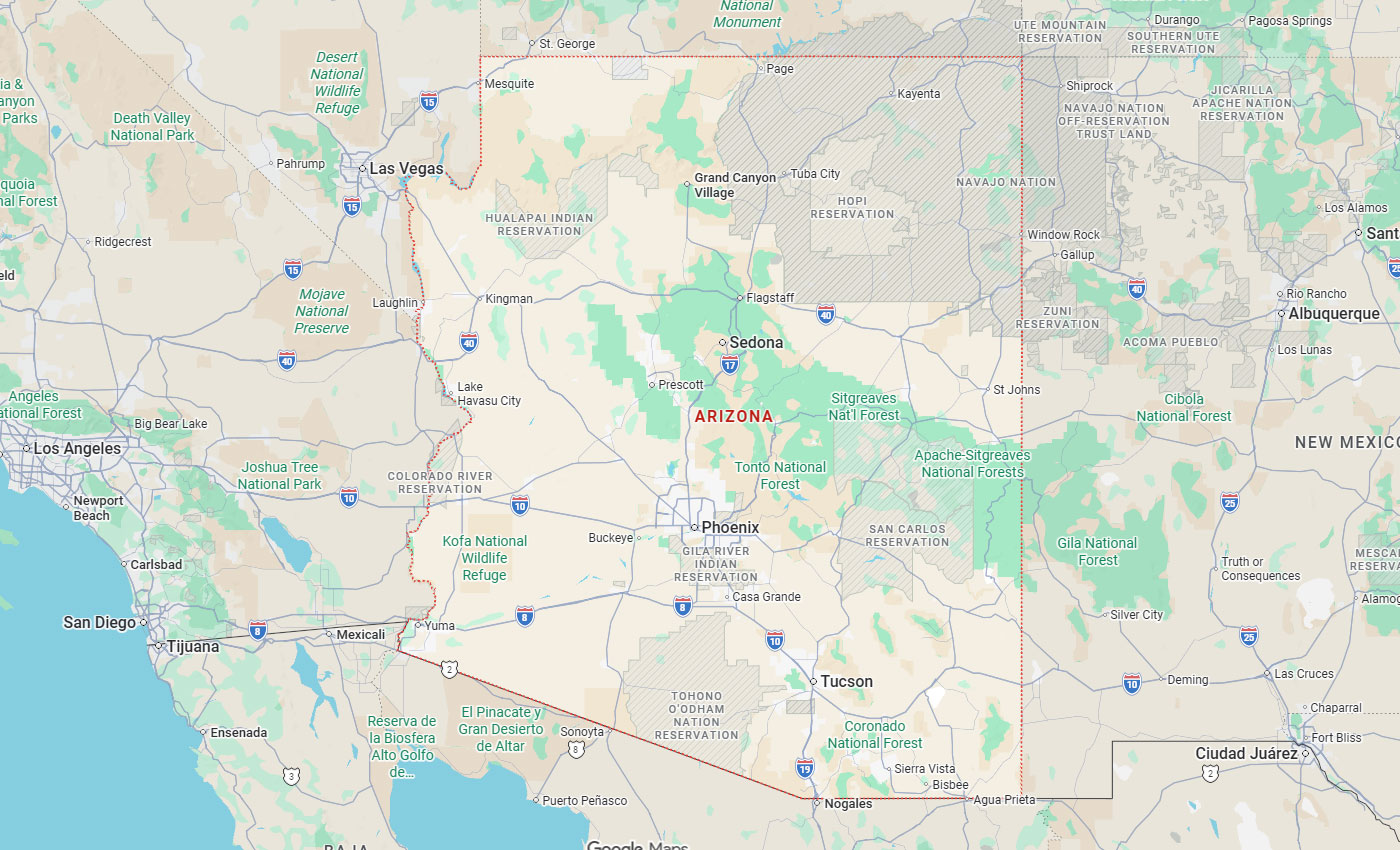
Phoenix, AZ
Key Takeaways
Underground utility conflicts remain the leading cause of construction delays, cost overruns, and safety incidents, with 94% of utility damage root causes attributed to incomplete or inaccurate subsurface information. The financial consequences are quantifiable: projects without proper utility investigation experience 29-40% higher costs and 9% longer schedules compared to those using systematic verification methods. For engineers, the question isn't whether to invest in utility data quality, but which investigation methods provide the accuracy their project risk demands.
The American Society of Civil Engineers addressed this challenge with ASCE 38-22, the Standard Guideline for Investigating and Documenting Existing Utilities. Published in 2022, this standard establishes four quality levels, QL-D through QL-A, that define how utility data is collected, verified, and documented, with corresponding accuracy tolerances ranging from unmeasured (existing records) to survey-grade positioning (physical exposure).
Understanding how to implement these quality levels, when to escalate from geophysical investigation to vacuum excavation, and how to integrate the resulting data into design workflows determines whether engineers deliver conflict-free plans or expensive field surprises. Here's what engineers need to know about ASCE 38-22 SUE standards.
ASCE 38-22 is the definitive standard for Subsurface Utility Engineering (SUE), a professional engineering process that manages risk through systematic utility investigation and documentation. Published in 2022, it replaces ASCE 38-02 and establishes the standard of care for how engineers collect, verify, and depict underground utility data. The companion standard, ASCE 75-22, standardizes how this data is exchanged between CAD and GIS systems, enabling integration with modern digital design workflows, including BIM.
The standard solves a fundamental engineering problem: how to quantify and communicate the reliability of utility location data. It defines four Quality Levels (QL-D through QL-A) that correspond to specific investigation methods and accuracy thresholds, allowing engineers to match data certainty to project risk tolerance.
| Topic | Older Approach (38-02) | ASCE 38-22 Approach | Why It Matters |
| Data Exchange | Limited guidance | ASCE 75-22 for GIS/CAD | Enables BIM integration |
| QL Depiction | Less specific | Must clearly mark every segment | Eliminates data ambiguity |
| Metadata | Basic | Chapter 3 comprehensive requirements | Full traceability |
| Legal Framework | General | Explicit standard of care | Clear liability protection |
When utility data becomes an engineered deliverable, it carries defined accuracy specifications, documented methodology, and professional certification, transforming it from presumptive information into design-grade data. The consequences of unreliable utility information are quantified: 94% of utility damage root causes stem from incomplete or inaccurate subsurface data (CGA 2022), and the CGA Index rose from 94.0 to 96.7 between 2023 and 2024, indicating escalating damage trends despite advancing detection technology.
Safety Outcomes Supported by SUE:
The standard directly addresses risk management: unknowns cost time and money through redesigns, utility relocations, and construction delays. Better utility information increases design confidence, allowing engineers to make informed decisions about foundation placement, bore paths, and conflict avoidance. Escalating from QL-C to QL-B typically costs less than 0.5% of total construction but yields 1.9% savings by preventing conflicts before they reach the field.
Utility Quality Levels at a Glance:
| Level | What It Is | How Obtained | Accuracy | When to Specify |
| QL-D | Existing records | As-builts, verbal accounts | None | Conceptual planning only |
| QL-C | Surveyed visible features | Survey manholes/valves + QL-D | 2 ft horizontal, no depth | Low-congestion, preliminary design |
| QL-B | Surface geophysics | EM and GPR + surveying | 0.2 ft (60 mm) horizontal | Minimum for design work |
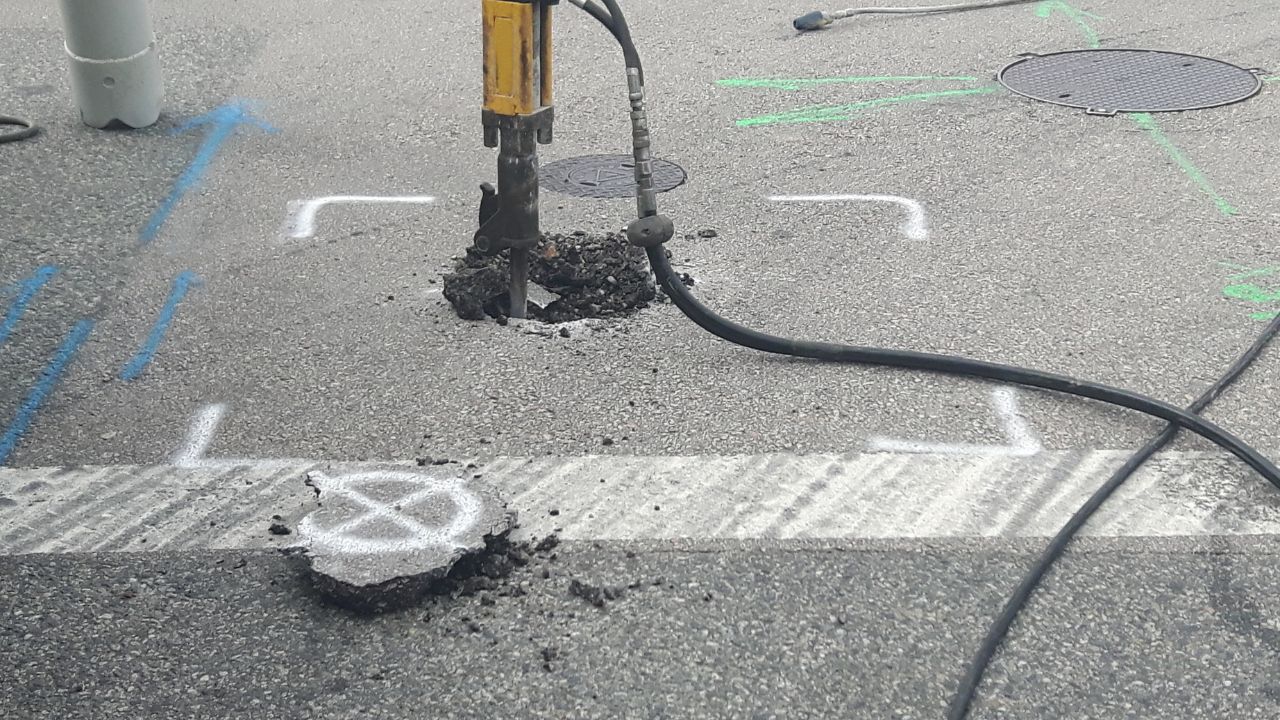
| QL-A | Physical exposure | Vacuum excavation | 0.2 ft horizontal, 0.1 ft (30 mm) vertical | Critical conflicts, tight tolerances |
When to Specify Each Level:
Key Technology Specifications:
Quality levels tie directly to risk tolerance: higher consequence scenarios demand higher quality data to avoid downstream conflicts and costs. The 10% accuracy improvement between QL-C and QL-B eliminates the majority of design-phase utility conflicts, while QL-A provides definitive positioning for scenarios where centimeters matter, foundation placement, directional bore crossings, or excavation adjacent to high-pressure lines.
Implementation Workflow:
Utility data collection follows a progressive verification model: engineers start with existing records (presumptive information with no reliability guarantee), then add field evidence through surface observation, geophysical investigation, and ultimately physical exposure. Each step increases confidence by replacing assumptions with measurements.
Records show what should exist; field surveys confirm what's visible; geophysics detects what's buried; and excavation verifies what's actually there. This progression directly correlates with accuracy improvement, from unmeasured (QL-D) to survey-grade positioning (QL-A).
Tools and Technologies Used in SUE:
Common Implementation Challenges:
Engineers reduce accuracy issues by validating field conditions before committing to investigation methods, wet soils trigger GPR frequency adjustments or method substitution, and congested corridors require multi-technology cross-validation. When environmental factors compromise data quality, the appropriate response is escalating to a higher QL or expanding the investigation area rather than accepting degraded accuracy.
All uncertainty and assumptions must be documented explicitly in deliverables: "QL-B horizontal position, depth estimated from GPR in saturated clay conditions" communicates both the verified data and its limitations.
Communication failures cause more SUE-related problems than technical limitations. Clear handoffs require explicit QL designations on every utility segment, documented investigation limitations, and coordination between SUE provider, designer, and contractor.
A utility marked "QL-B, no physical verification" means the designer knows excavation requires field confirmation, and the contractor understands that as-built conflicts are possible. Missing these designations eliminates the standard's risk management value.
The cost equation is straightforward: invest less than 0.5% of construction costs upfront to avoid 29-40% cost increases downstream. Engineers choosing to skip SUE or rely on low-quality data gamble that existing records are accurate and complete, a bet with poor odds given that 94% of utility damage stems from data deficiencies. The return on investment ranges from $4.62 to $22.21 saved per dollar spent on SUE, with $11.39 being the commonly cited figure across transportation projects. This ROI materializes through fewer utility relocations (40.33% cost reduction), reduced design changes (9.59% reduction), and shorter construction durations (9.08% reduction in delays).
Schedule impacts depend on when SUE occurs relative to design milestones. Early investigation during preliminary design informs alignment decisions and eliminates conflicts before they're drawn. Late investigation, during or after final design, becomes critical path work that delays bid packages and construction mobilization. Verification through QL-A vacuum excavation requires coordination with traffic control, utility owners, and surveyors, making it the most schedule-sensitive activity. Plan for 1-2 weeks per mobilization for QL-A work in urban corridors.
Non-Compliance Risk Categories:
Engineers reduce liability through documentation discipline: explicitly call out QL designations on every utility segment, maintain coordination records with utility owners and agencies, document all assumptions and investigation limitations, and ensure a licensed PE certifies the SUE work. When a utility conflict occurs, the question becomes whether the engineer followed the standard of care, as ASCE 38-22 defines that standard.
Proper implementation creates a defensible record showing appropriate quality level selection for project risk, compliant investigation methods, and clear communication of data limitations. Understanding SUE quality levels is essential for utility locating compliance and reducing project liability.
Where ASCE 38-22 Shows Up in Contracts:
ASCE 38-22 provides the technical foundation that other standards and agency requirements reference. State DOT specifications cite it for quality level definitions and accuracy requirements; ASCE 75-22 extends it into digital data exchange; FHWA guidance uses it as the framework for federal funding eligibility. The standard operates as industry consensus on what constitutes reliable utility data, while agency specifications make it enforceable through contract language.
FHWA has encouraged SUE on Federal-aid projects since 1991, but actual regulatory requirements vary by state. ASCE 38-22 is a guideline, not a federal mandate, though numerous State DOTs have formally adopted these engineering guidelines into their project specifications.
ASCE 38-22 vs Other Utility Mapping Guidance:
| Standard | Primary Purpose | Typical Users | Where It's Strongest |
| ASCE 38-22 | Define SUE quality levels | Engineers, SUE providers, DOTs | Risk-based framework, accuracy standards |
| ASCE 75-22 | Data exchange/GIS | GIS/CAD managers | Digital integration, BIM workflows |
| FHWA SUE Guidance | Federal implementation | Federal/state agencies | Funding eligibility, policy framework |
| State DOT Specs | Project requirements | State projects | Enforceable contract language |
Reconciling ASCE 38-22 with local agency requirements happens during scoping: identify where agency specifications exceed the standard (tighter tolerances, additional metadata fields) or conflict with it (non-standard terminology, different quality level definitions). Harmonize specifications early, before RFP issuance, to avoid mid-project disputes over deliverable compliance. Most conflicts stem from legacy language predating ASCE 38-22; updating agency standards eliminates these issues.
Performance improvements manifest as design certainty: engineers know the accuracy of their utility data and can design accordingly, reducing RFIs, eliminating field conflicts, and improving constructability. With 99.8% accuracy achievable through multi-technology approaches and field staff requiring only 1-2 days of training for integrated EM/GPR/GNSS systems, implementation barriers are low.
Projects completed using ASCE 38-22 quality levels finish up to 10% faster than traditional approaches by avoiding the redesign-relocate-delay cycle that plagues projects relying on record data.
Key Performance Metrics:
Long-Term Benefits:
Client-facing value centers on predictability: owners get fewer change orders, contractors work with reliable conflict-free plans, and all parties share clear expectations about data quality and limitations. When a utility owner receives QL-A verification showing their 8-inch gas main is actually 6 inches and 2 feet shallower than records indicated, that corrected information prevents a future excavation incident, and the data becomes a reusable asset for the owner's GIS. ASCE 38-22 transforms utility locating services from a project expense into infrastructure intelligence.
ASCE 38-22 defines four quality levels (QL-D to QL-A) with specific accuracy tolerances, establishing a risk-based framework for utility data reliability. ROI ranges from $4.62-$22.21 per $1 invested, with 29% cost reductions and 50% fewer utility strikes demonstrated across multiple project types. Implementation requires phased QL escalation, starting with existing records and progressing to field verification at critical points, combined with multi-technology approaches using EM and GPR, and comprehensive documentation of methods, limitations, and assumptions.
Key Takeaways for Engineers:
Next Steps:
The difference between projects that experience utility conflicts and those that don't often comes down to data quality decisions made during design. These SUE standards provide the framework for making those decisions systematically rather than optimistically.
Need expert SUE services that meet ASCE 38-22 standards? Contact BESS Utility Solutions to discuss QL-B and QL-A investigations for your next project.