Hayward, CA
Fresno, CA
Orange, CA
Sacramento, CA
Phoenix, AZ
Key Takeaways
Locating underground power lines is essential for various industries, including construction, maintenance, and utility management. Traditional methods of detecting these lines often involved excavation, leading to costly delays and the risk of damaging other underground utilities. However, with advancements in non-destructive testing (NDT) methods, private underground utility locating services now offer more accurate and less disruptive solutions.
In this article, we will explore how NDT, particularly Ground Penetrating Radar (GPR), is used to detect underground power lines. We will also delve into the benefits and limitations of GPR, helping you understand how this technology is shaping the future of underground utility locating services.
Non-destructive testing (NDT) is a method used to evaluate the properties of a material, component, or structure without causing damage. When applied to underground power line detection, NDT allows for the identification and mapping of buried utilities without the need for digging or excavation. This makes NDT a safer and more cost-effective option for utility locating.
One of the most prominent forms of NDT used for detecting underground power lines is Ground Penetrating Radar (GPR). Let's take a closer look at how this technology works and its role in the field of private utility locating services.
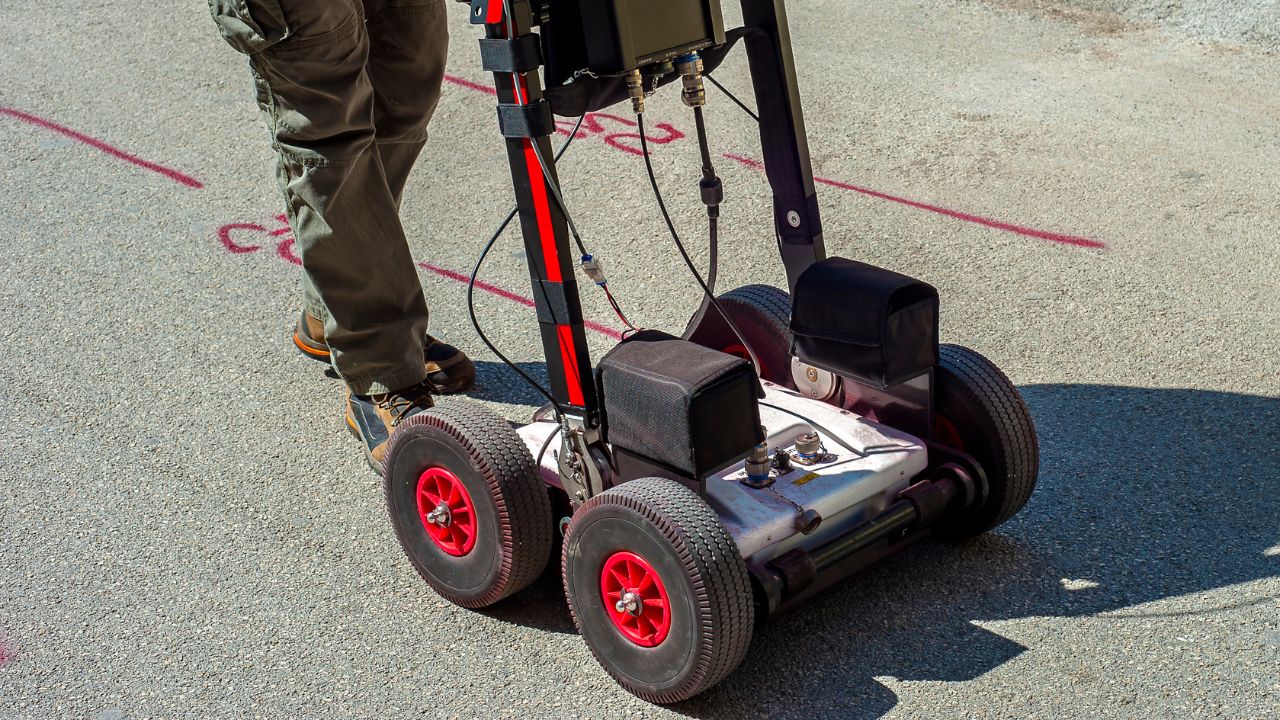
GPR is a non-invasive method that uses radar pulses to scan the subsurface. It works by sending high-frequency radio waves into the ground, which bounce back when they encounter different materials. The GPR receiver then analyzes these reflections to create a detailed image of the subsurface. This makes GPR an effective tool for detecting underground power lines, as it can distinguish between different materials and locate metallic and non-metallic utilities.
Another NDT method for detecting underground power lines is magnetic field induction. This method works by using electromagnetic waves to detect the magnetic field generated by live electrical cables. By using sensors to detect these magnetic fields, utility locating services can identify the exact location of power lines.
Ground Penetrating Radar (GPR) has emerged as one of the most effective NDT methods for underground power line detection. Here are some of the key benefits that make GPR a preferred choice in private underground utility locating services:
GPR provides highly accurate results when detecting underground power lines. It can measure both the depth and position of buried utilities with great precision, helping to avoid accidents and costly damage during excavation projects.
One of the standout features of GPR is its ability to detect both metallic and non-metallic underground utilities. This makes it more versatile compared to other NDT methods, which may only work for specific types of utilities.
As a non-invasive technology, GPR significantly reduces the risk of damage to underground utilities. Unlike traditional digging or probing, GPR scans the ground without disturbing the soil, minimizing the chances of damaging power lines or causing soil disruption.
Using GPR for underground utility detection is efficient and cost-effective, as it provides real-time data and reduces the need for costly repairs caused by accidental damage to power lines. Additionally, GPR surveys can be completed quickly, which helps keep projects on schedule.
While GPR is a powerful tool for utility locating services, it does come with certain limitations. Understanding these limitations can help operators decide when GPR is the best solution and when other methods might be needed.
GPR can struggle in specific types of soil, especially those that are highly mineralized or contain a lot of water. High clay content and dense soils can absorb or scatter the radar waves, making it difficult for the GPR system to produce clear and accurate results.
While GPR is effective at locating utilities at shallow depths, its ability to detect deeper utilities diminishes as the depth increases. Extremely deep power lines or utilities may be harder to detect, especially in challenging soil conditions.
GPR produces complex data that requires skilled operators to interpret correctly. The images and results can be difficult to read without proper training and experience, leading to potential misinterpretations if handled by inexperienced personnel.
When it comes to locating underground power lines, having the right tools and expertise is crucial. Private utility locating services offer the advantage of professional-grade technology and skilled technicians who can ensure the accurate detection of power lines and other buried utilities.
For reliable, accurate, and efficient underground power line detection, Bess Utility Solutions offers state-of-the-art GPR services. Our team of experts uses the latest technology to ensure that your project is completed safely, on time, and within budget.
Contact Bess Utility Solutions today to learn more about their private underground utility locating services and how they can help you with your next project.