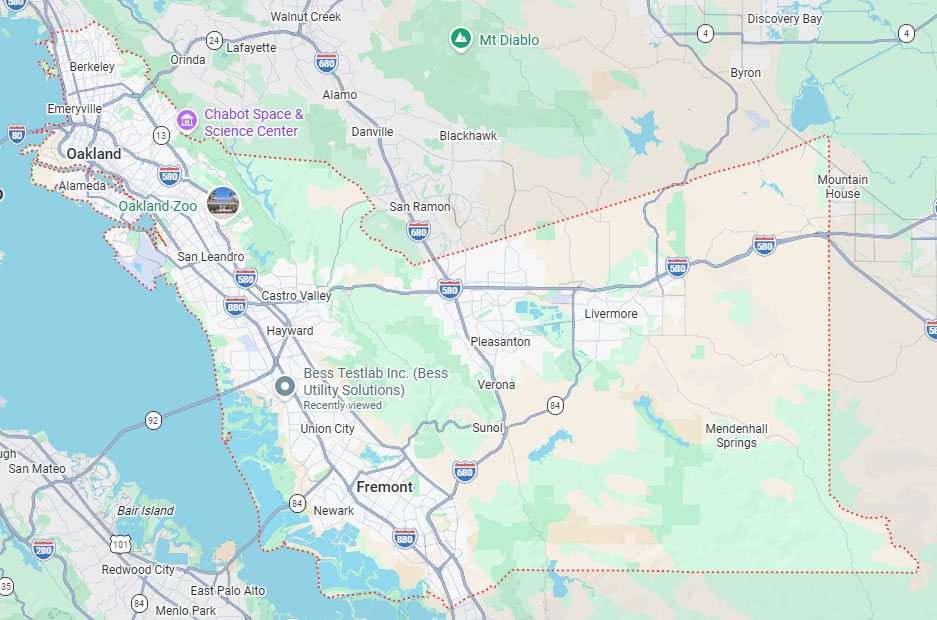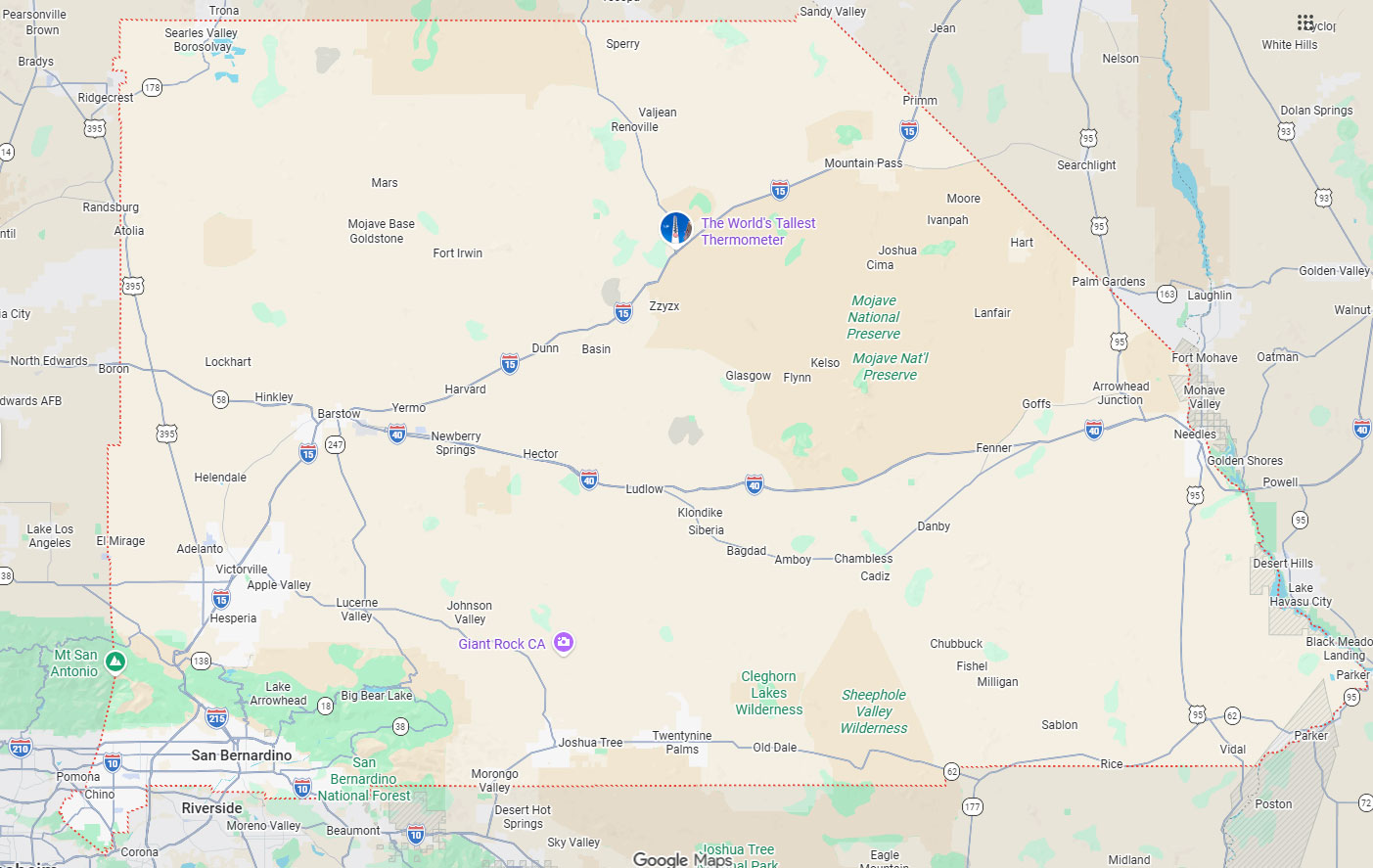
Hayward, CA
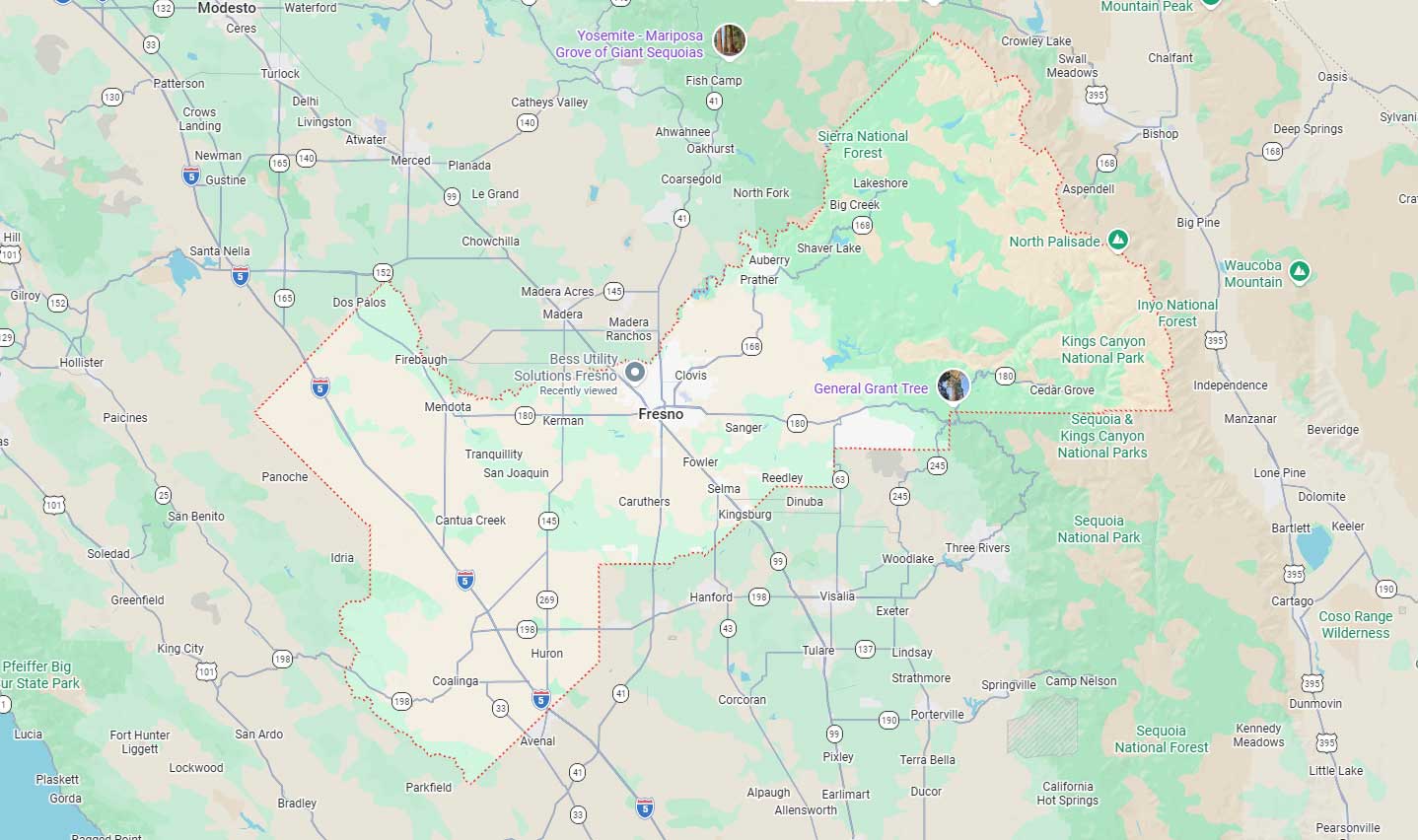
Fresno, CA
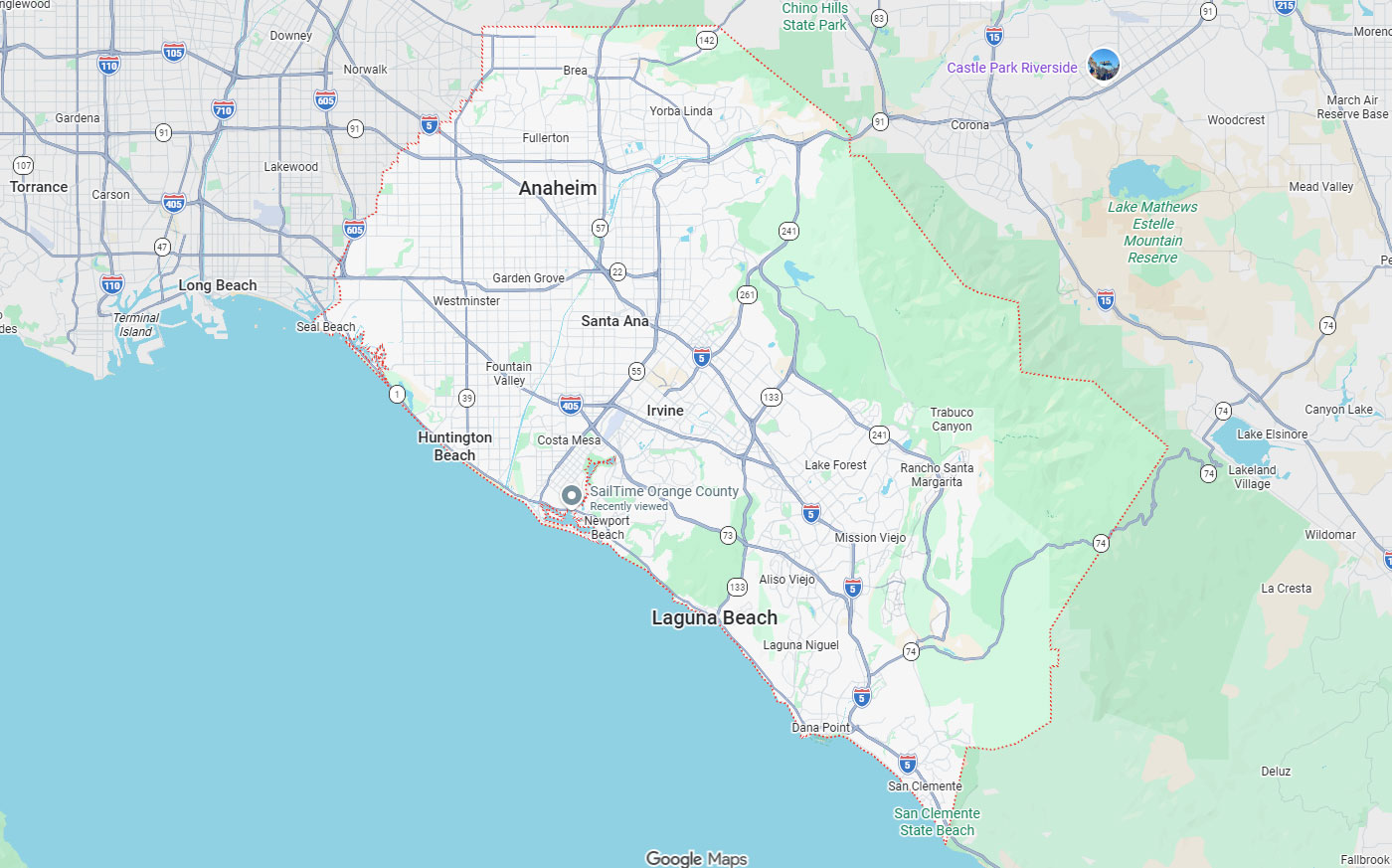
Orange, CA
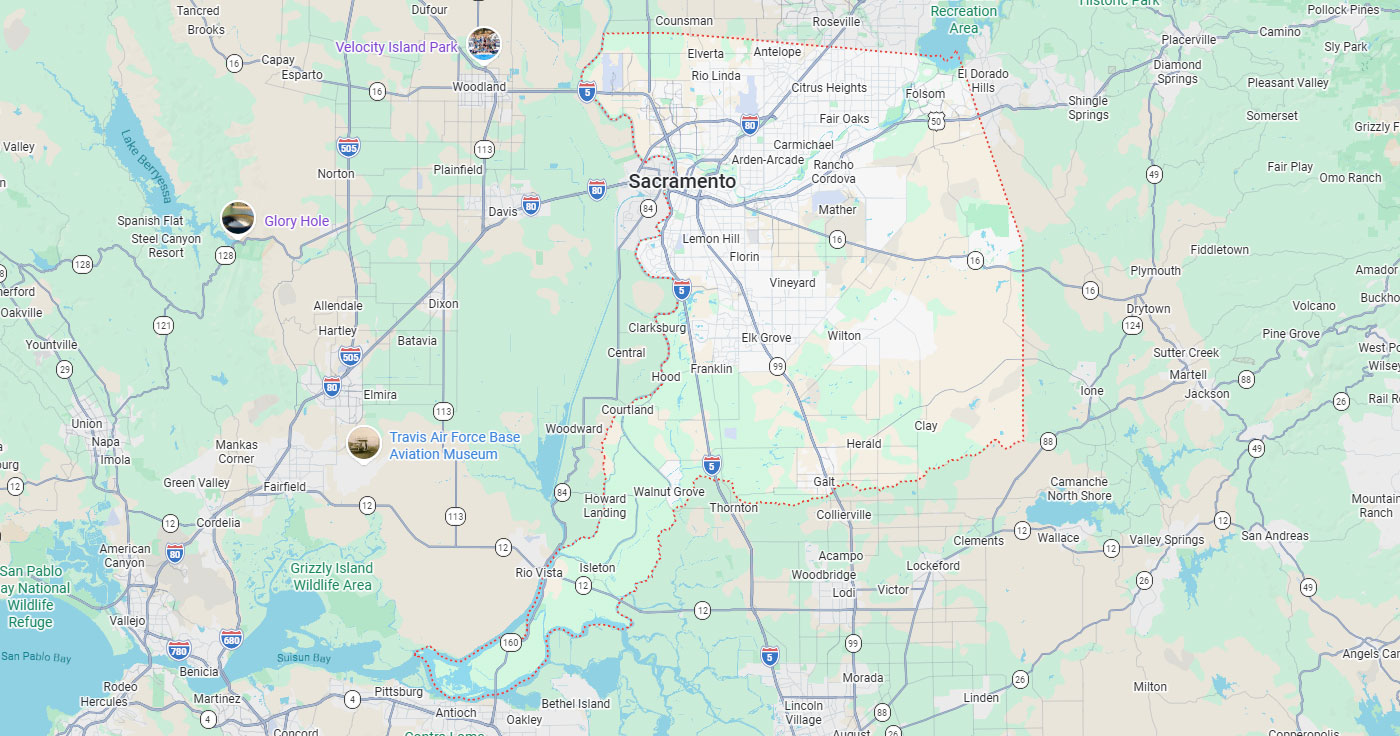
Sacramento, CA
Phoenix, AZ
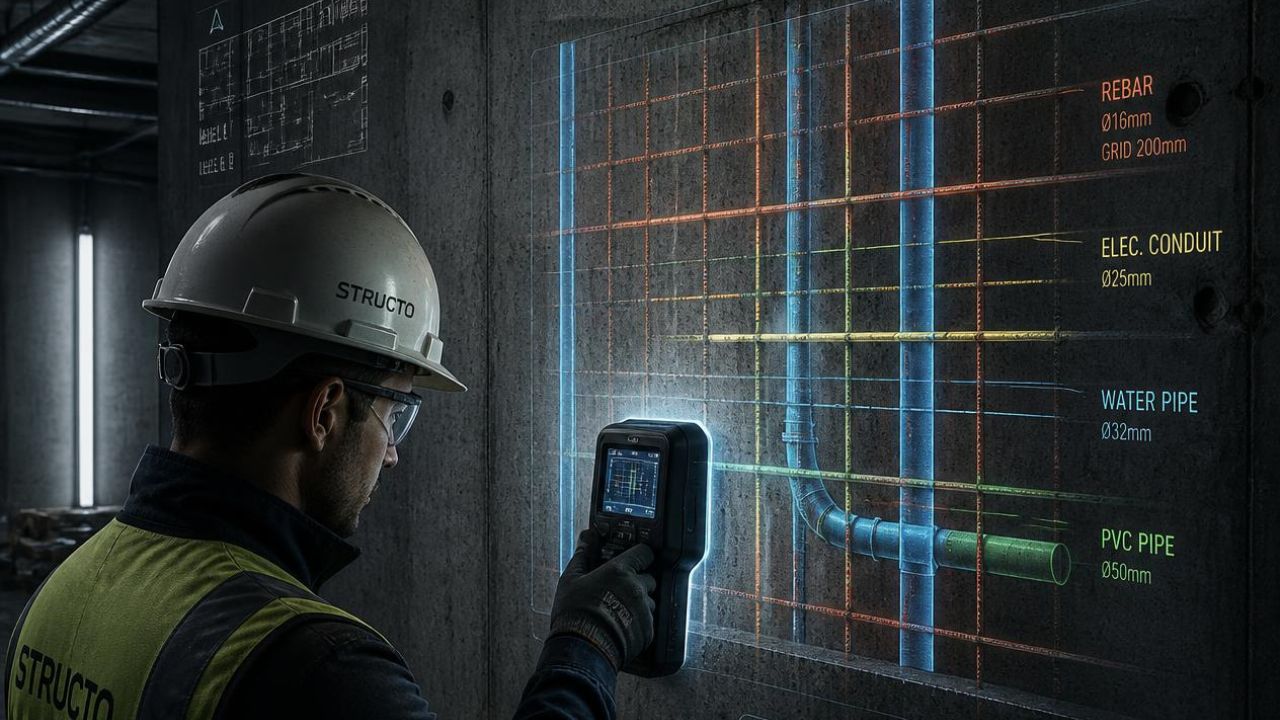
Institutional facilities require precise subsurface mapping to prevent structural damage and utility strikes during construction. Schools, hospitals, and public buildings contain complex networks of utilities, rebar, and post-tension cables that must remain undisturbed. Advanced scanning technologies identify these hidden elements before cutting, coring, or excavation begins.
The financial consequences of subsurface damage are severe in institutional settings. A single utility strike averages $56,000 in repair costs and causes 8 to 12 weeks of project downtime. Scanning schools, hospitals, and similar facilities protects infrastructure integrity and the people who depend on uninterrupted services.
Key Takeaways
Scanning technologies use electromagnetic waves and acoustic pulses to detect subsurface objects non-destructively. Ground Penetrating Radar, Electromagnetic Locating, and Ultrasonic Pulse Echo represent the primary technologies used in institutional facilities. Each method offers distinct capabilities for detecting different materials at varying depths.
Technology selection depends on project requirements and site conditions. GPR concrete scanning provides comprehensive imaging of all subsurface materials, while EM locating excels at identifying metallic utilities. Both technologies play essential roles in preventing damage to critical infrastructure systems.
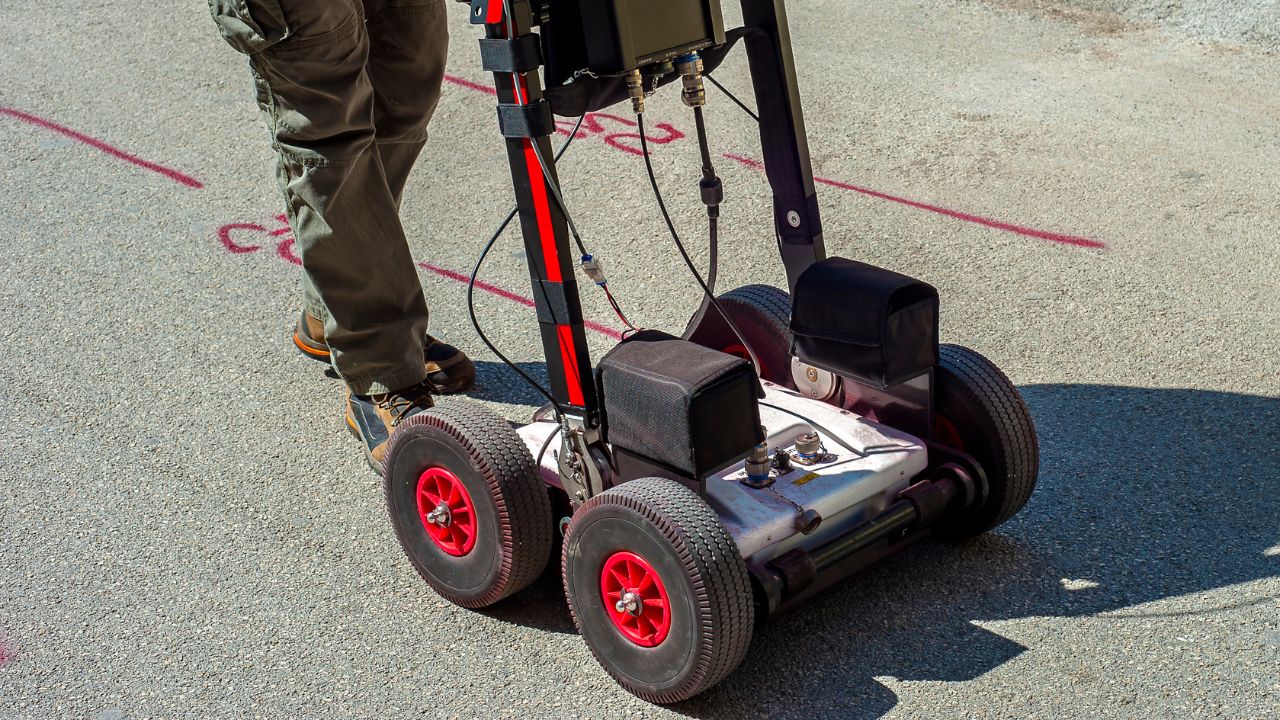
Ground Penetrating Radar transmits high-frequency electromagnetic waves into concrete or soil to create subsurface images. GPR systems detect all materials, including metal, plastic, voids, and changes in soil composition. The technology achieves a depth capability of 18 to 24 inches in concrete, ideal for rebar utility locating and comprehensive facility mapping.
GPR commands 48.5% of the concrete scanners market and represents 46.7% of global rebar scanner revenue. High-frequency GPR antennas operating at 2 GHz enable corrosion detection in reinforcing steel, identifying structural deterioration before visible surface damage appears. This capability allows facility managers to implement targeted repairs that extend structural lifespan.
Electromagnetic locating uses radio frequencies to detect energized or traced metallic utilities beneath the surface. EM systems induce current in conductive materials and track the resulting electromagnetic field, providing fast results for identifying electrical conduits, metal water lines, and gas pipes at various depths.
EM locator equipment costs approximately $5,000, making it accessible for basic metallic utility detection. Ultrasonic Pulse Echo technology assesses concrete condition and thickness by measuring acoustic wave reflections, excelling at detecting delamination but limited to concrete thickness measurement and structural integrity assessments.
GPR targets all materials, including metal, plastic, and voids, while EM locating detects metallic utilities only. GPR penetrates 18 to 24 inches in concrete, whereas EM varies but generally reaches deeper for metal objects. GPR offers comprehensive imaging and non-destructive analysis, though it requires complex interpretation and shows moisture sensitivity.
EM locating provides simple operation and fast results, but cannot detect PVC pipes or fiber-optic cables. GPR systems cost $14,000 to $100,000 or more depending on features, while EM locators average $5,000. Comparing GPR and electromagnetic utility locating helps project teams select appropriate technology for specific site conditions.
| Technology | What It Detects | Depth Range | Typical Equipment Cost |
| GPR | Metal, plastic, voids, rebar, post-tension cable, soil changes | 18 to 24 inches in concrete | $14,000 to $100,000+ |
| EM Locating | Energized or traced metallic utilities only | Varies by conductor depth | About $5,000 |
| Ultrasonic Pulse Echo | Concrete thickness and delamination | Limited to concrete depth | Varies by system |
Institutional facilities contain critical infrastructure systems that support daily operations and public safety. Severing rebar or post-tension cables compromises structural integrity and creates immediate life-safety hazards. Scanning identifies these elements before cutting or coring begins, preventing catastrophic structural failures.
The absence of accurate subsurface data leads to costly mistakes and extended project delays. Post-tension cable damage repair costs upwards of $30,000, while single conduit severance averages $12,000, excluding indirect costs from work stoppages, liability claims, and regulatory penalties.
Corrosion of reinforcing steel leads to cracking, spalling, and eventual structural failure. Early identification of corrosion allows facility managers to implement targeted interventions before visible damage appears. Scanning must occur prior to any cutting or coring to avoid severing load-bearing rebar or post-tension cables.
Damaged post-tension cables lose their ability to maintain compressive forces throughout concrete slabs. Repair costs for severed post-tension systems reach upwards of $30,000 per incident. Preventing utility damage through proper scanning protocols protects both structural integrity and project budgets.
Hospitals require uninterrupted operation of life-safety systems, medical gas lines, and backup power networks during construction. Hospital medical imaging suites and operating rooms represent renovation project types with zero tolerance for utility disruptions. Any damage to these systems compromises patient care and triggers immediate regulatory scrutiny.
K-12 and higher education campuses undergo continuous renovations to modernize aging infrastructure and expand capacity. Educational facilities operate on private property where public 811 locating services provide insufficient coverage. Comprehensive private utility scanning becomes necessary to protect students, staff, and critical campus systems throughout public building construction projects.
Institutional ground disturbance plans mandate public 811 locating prior to excavation or concrete cutting. Public 811 services mark only utilities in public rights-of-way, leaving private utilities unidentified on institutional campuses. Private utility scanning addresses this gap by mapping the estimated 60% of lines that exist beyond public service areas.
Green Box Guarantees provide assurance that marked areas are free of obstructions, shifting liability risk from project owners to scanning providers. These guarantees require comprehensive documentation demonstrating compliance with safety compliance standards and industry best practices. Municipal utility locating and mapping establishes the foundation for long-term infrastructure management.
Construction professionals across all market segments rely on scanning services to prevent subsurface damage. Large contractors, small and medium enterprises, and municipal agencies prioritize different scanning capabilities based on operational needs. Project complexity, budget constraints, and liability exposure determine which technologies and service levels organizations select.
Handheld scanners represent 35.8% of the market, appealing to professionals requiring portable, immediate subsurface assessments. More sophisticated users integrate GPR data with 3D laser scanning to create comprehensive Building Information Modeling systems. BIM integration provides digital construction data that supports design coordination and long-term facility management.
3D GPR Arrays enable rapid coverage of large areas through automated scanning systems mounted on carts or vehicles. These advanced systems cost $50,000 to $150,000 or more, positioning them as premium solutions for major institutional projects. 3D GPR Arrays provide comprehensive subsurface mapping but require extensive post-processing.
The technology excels at scanning parking structures, bridge decks, and large floor slabs where manual scanning would be prohibitively time-consuming. Integration of GPR data with 3D laser scanning creates millimeter-accurate point clouds that document existing conditions, becoming permanent records supporting future renovations and maintenance planning.
Large contractors adopt premium GPR systems ranging from $14,000 to $100,000 or more for comprehensive project coverage. These organizations prioritize comprehensive data, risk mitigation, and the ability to provide Green Box Guarantees to clients. Premium systems offer advanced features including real-time data processing, integrated GPS positioning, and BIM-compatible output formats.
Small and medium contractors favor cost-effective handheld scanners that balance capability with affordability. These users focus on immediate field marking rather than extensive digital documentation. Handheld units provide sufficient accuracy for most concrete cutting and coring operations without the complexity of larger systems.
Municipal buildings and transportation infrastructure require scanning to protect public assets and ensure regulatory compliance. Public agencies prioritize accuracy and comprehensive documentation to mitigate liability and support long-term asset management programs. These organizations often mandate ASCE 38-02 compliance and detailed reporting for all subsurface investigation activities.
Public 811 services remain insufficient for private property within municipal campuses and facilities. Comprehensive private utility locating becomes necessary to identify water mains, electrical conduits, and telecommunications infrastructure serving government buildings. GPR safety improvements in excavation and construction protect workers and maintain service continuity throughout public infrastructure projects.
Educational facilities face unique challenges in balancing construction activities with continuous campus operations. MEP systems create dense networks of utilities within walls, floors, and ceilings. Poor communication and inadequate project data account for 48% of all construction rework, costing the average professional 14 hours weekly.
Accurate scanning data eliminates these inefficiencies by providing reliable subsurface information before work begins. Digital reporting and BIM integration allow design teams to coordinate new systems around existing infrastructure, preventing conflicts, reducing change orders, and maintaining project schedules in occupied institutional facilities.
Educational campuses contain decades of undocumented utility additions, alterations, and abandoned systems, creating complex subsurface conditions. As-built drawings frequently contain errors or omissions, making historical records unreliable for construction planning. Scanning provides current, accurate data that reveals actual conditions rather than assumed configurations.
K-12 schools must maintain uninterrupted operations during construction, limiting work to evenings, weekends, and summer breaks. This compressed schedule increases pressure to avoid mistakes that cause delays and extend construction into academic periods. Comprehensive scanning protects critical systems, including fire alarms, emergency lighting, and security networks that support student safety.
Hospital operating rooms represent renovation project types with strict infection control requirements and minimal tolerance for disruptions. Medical imaging suites contain sensitive equipment that cannot tolerate power interruptions or electromagnetic interference. Scanning identifies electrical conduits, medical gas lines, and data networks before cutting or drilling begins.
The average utility strike causes 8 to 12 weeks of downtime, an unacceptable disruption in healthcare environments. Combining utility locating and potholing provides verification before excavation or cutting activities commence. Hydro vacuum excavation complements scanning by exposing utilities without damage risk, confirming their exact locations and conditions.
The U.S. Bipartisan Infrastructure Law totaled $1.2 trillion, funding widespread upgrades to aging public buildings and transportation systems. This unprecedented investment drives demand for accurate subsurface mapping to support design and construction phases. The global rebar scanner market, valued at USD 9.44 billion in 2025, reflects this increased activity.
Market projections indicate the rebar scanner sector will reach USD 17.13 billion by 2033, expanding at a CAGR of 7.73%. Year-over-year growth from 2020 to 2024 averaged approximately 7.7%, accelerating as infrastructure funding reached project execution stages. Public agencies require comprehensive scanning to ensure new systems integrate properly with existing infrastructure networks.
Service pricing reflects the complexity of scanning requirements, site conditions, and deliverable formats. Budget-tier scanning ranges from $250 to $800 for basic field marking. Mid-range scanning costs $800 to $2,500 and includes multi-line scanning with basic digital reporting.
Premium scanning services range from $2,500 to $5,000 or more for comprehensive grid surveys and BIM integration. These services provide detailed subsurface mapping, 3D modeling, and extensive documentation supporting design coordination. Estimated crew costs of $96.00 per hour factor into pricing, along with equipment deployment and post-processing time.
Budget-tier services provide basic field marking for straightforward concrete cutting or coring operations. These services use handheld GPR or EM locators to identify immediate subsurface hazards along proposed cut lines. Documentation typically consists of paint or chalk markings directly on the work surface.
Mid-range services scan multiple areas and provide digital photographs or simple CAD drawings showing detected objects. This tier addresses projects requiring coordination between multiple trades or phased construction activities. Premium services deliver comprehensive subsurface mapping with precise depth measurements, material identification, and BIM-compatible 3D models supporting long-term facility management.
| Service Tier | Price Range | What's Included |
| Budget | $250 to $800 | Handheld GPR or EM field marking for a single cut or bore line |
| Mid-Range | $800 to $2,500 | Multi-line scanning with digital photos or basic CAD drawings |
| Premium | $2,500 to $5,000+ | Comprehensive grid surveys, precise depth data, and BIM-compatible 3D models |
Advanced scanning equipment, including 3D GPR Arrays and high-frequency antennas, increases service costs but provides superior data quality. Complex sites with dense utility congestion require more time for thorough scanning and interpretation. Estimated crew costs of $96.00 per hour reflect the skilled labor necessary for an accurate subsurface investigation.
Single conduit severance averages $12,000 in repair costs, excluding indirect expenses from project delays. This repair cost alone justifies scanning investments for most institutional projects where multiple utilities exist.
Digital reporting provides permanent documentation of subsurface conditions discovered during scanning. These records support future renovations by establishing baseline utility locations and structural configurations. BIM integration allows design teams to visualize proposed systems in relation to existing infrastructure, preventing conflicts before construction begins.
3D models generated from scanning data enable virtual coordination meetings where stakeholders identify potential issues early. This proactive approach reduces change orders, accelerates approvals, and improves construction quality. The value of accurate digital documentation compounds over time as facilities undergo successive renovation cycles.
Approximately 1,100 utility damage events occur daily in the United States, resulting in over 163,000 utility strikes annually. The average cost of a single utility strike reaches $56,000 including repairs, project downtime, liability, and regulatory fines. Total annual costs from utility strikes exceed $100 billion when including private utilities not covered by public 811 services.
Work stoppages add $185,000 in indirect costs per incident through lost productivity, schedule extensions, and revenue delays. These figures demonstrate why scanning services deliver exceptional return on investment. Preventing a single utility strike generates returns far exceeding the cost of comprehensive scanning services.
Private utilities account for an estimated 60% of all lines, yet public 811 services locate only utilities in public rights-of-way. This gap leaves the majority of institutional campus utilities unmarked and vulnerable to damage. Comprehensive private utility locating addresses this deficiency by mapping all subsurface infrastructure regardless of ownership.
Project delays resulting from utility strikes cause revenue loss for commercial tenants unable to occupy completed spaces. Educational institutions face disruption to academic schedules when construction extends beyond planned completion dates. Healthcare facilities risk regulatory sanctions and patient care disruptions when critical systems sustain damage.
A typical comprehensive scanning service costing $2,500 provides 22.4x return on investment when preventing a single average utility strike. This calculation compares scanning costs directly against the $56,000 average strike cost excluding indirect expenses. When factoring work stoppages adding $185,000 in indirect costs, the ROI increases to over 96x.
Post-tension cable damage repair costs upwards of $30,000, representing another high-value risk reduction opportunity. Even budget-tier scanning services costing $250 to $800 deliver significant returns when protecting against structural damage.
Inaccurate historical as-built drawings remain common in urban areas where decades of modifications have created complex subsurface conditions. Relying solely on existing documentation without verification through scanning increases the damage risk substantially. Best practices mandate both public 811 locating and comprehensive private utility scanning before any ground disturbance.
Institutional ground disturbance plans establish protocols requiring scanning prior to excavation or concrete cutting. These plans assign responsibility for subsurface investigation, define acceptable scanning methods, and specify documentation requirements. Adherence to these protocols protects workers, infrastructure, and project budgets throughout construction activities.
Urban commercial renovations encounter dense, overlapping utility networks that complicate subsurface investigation. Hayward, California, exemplifies urban commercial renovation markets where aging infrastructure and incomplete records create scanning challenges. Properties in established commercial districts contain utilities installed across multiple decades without comprehensive documentation.
Modern renovation projects must accommodate new MEP systems while preserving existing infrastructure serving adjacent tenants. This demands precise subsurface mapping to identify available routing paths and avoid conflicts. Dense utility corridors require systematic scanning approaches that account for multiple services at varying depths.
Urban environments contain metallic water lines, PVC sewer laterals, fiber-optic telecommunications, electrical conduits, and natural gas services within limited subsurface space. No single scanning technology detects all these materials with equal effectiveness. Systematic investigation strategies combine multiple technologies to achieve comprehensive detection.
Site-specific factors, including pavement thickness, soil conditions, and electromagnetic interference, influence technology selection and scanning parameters. Experienced technicians adjust antenna frequencies, scan directions, and data collection density based on observed conditions. This adaptive approach ensures reliable detection in challenging urban environments where standard protocols may prove insufficient.
Hybrid scanning approaches combine GPR and EM locating to identify both metallic and non-metallic embedments. GPR detects PVC pipes, fiber-optic cables, voids, and changes in material composition that EM systems cannot identify. EM locates rapidly traces energized electrical conduits and provides confirmation of metallic utility positions.
This complementary approach maximizes detection reliability while minimizing the risk of undetected utilities. Dense urban utility corridors benefit particularly from hybrid methods that cross-verify findings between technologies. The incremental cost of hybrid scanning remains minimal compared to the consequences of missing critical infrastructure.
Green Box Guarantees shifts liability risk from project owners and contractors to scanning service providers within marked areas. These guarantees require comprehensive documentation demonstrating adherence to industry standards and methodical scanning protocols. Providers offering guarantees typically maintain professional liability insurance covering potential damages from undetected utilities.
The guarantee creates accountability throughout the scanning process, ensuring thorough investigation and accurate reporting. Project teams gain confidence to proceed with cutting or excavation activities within guaranteed areas. This risk transfer enables more aggressive scheduling and reduces financial exposure for all project stakeholders.
Institutional facilities demand the highest standards for subsurface investigation due to operational continuity requirements and public safety responsibilities. Comprehensive scanning programs integrate multiple technologies to achieve reliable detection across all utility types and structural elements. Digital documentation supports immediate construction needs while establishing permanent records for long-term facility management.
The financial justification for scanning services remains clear across all institutional project types and scales. Preventing utility strikes and structural damage protects project budgets, schedules, and professional reputations. Organizations like Bess Utility Solutions deliver ASCE 38- to 02-compliant scanning services that meet the rigorous standards institutional projects demand.
Advanced scanning technologies continue evolving with improved data processing, BIM integration capabilities, and automated collection systems. These innovations increase efficiency while maintaining the accuracy and reliability institutional stakeholders require. Investment in comprehensive scanning programs positions organizations to execute complex renovations safely and cost-effectively.
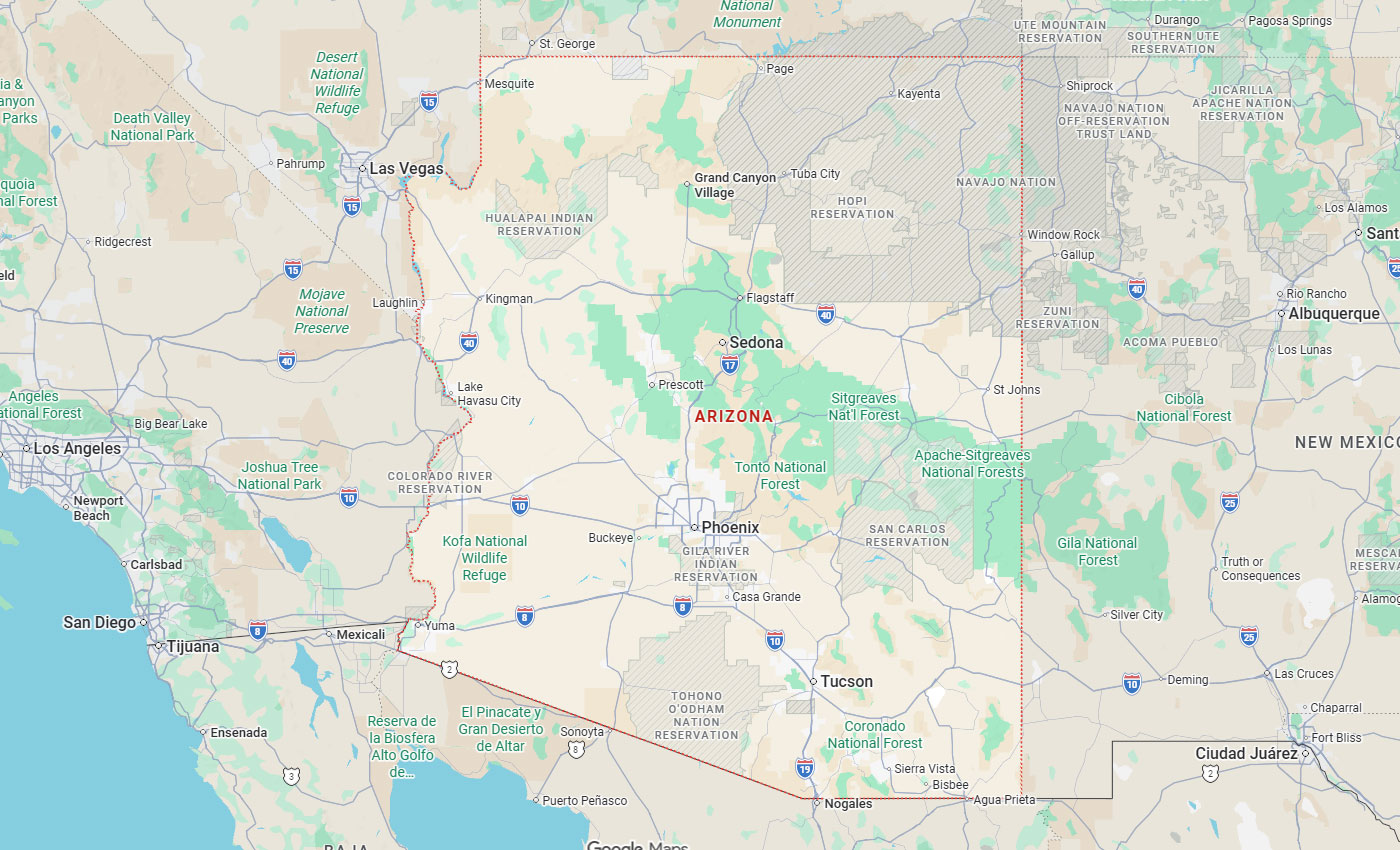
Schools, hospitals, and public agencies cannot absorb the cost, downtime, or liability of an unmarked utility or a severed post-tension cable. To protect your next institutional project, contact Bess Utility Solutions for ASCE 38- to 02-compliant GPR concrete scanning, EM locating, and rebar detection across California, Arizona, and Nevada. Our CPUC-certified MBE/DBE team has 29 years of experience serving schools, hospitals, and municipal facilities from regional offices in Hayward, Fresno, Ontario, Orange, and Sacramento. Call (408) 988-0101 or request a quote to schedule a scanning appointment before your next cutting, coring, or excavation activity begins.
A. Pricing depends on project scope and site complexity. Budget-tier field marking starts around $250 to $800, mid-range multi-line scanning with digital reporting runs $800 to $2,500, and premium grid surveys with BIM integration range from $2,500 to $5,000 or more. Institutional projects with dense MEP systems or multiple cutting locations typically fall into the mid-range or premium tiers to support proper documentation.
A. No. Ground Penetrating Radar and electromagnetic locating are non-destructive and generate no vibration, noise, or downtime for occupied spaces. Technicians can scan operating rooms, classrooms, and mechanical spaces without interrupting medical equipment, instruction, or building systems. Scheduling is typically arranged around evenings, weekends, or planned maintenance windows to further limit any operational impact.
A. Most single-area scans are completed within a few hours, while larger institutional projects involving multiple rooms or grid surveys may take one to two days. Turnaround depends on the number of cut lines, the density of existing utilities, and whether digital reporting or BIM deliverables are required. Scheduling a scan several days ahead of planned cutting or excavation keeps the project timeline on track.
A. Ground Penetrating Radar detects PVC pipes, fiber-optic cables, voids, and other non-metallic materials that electromagnetic locators cannot identify. Electromagnetic locating is limited to energized or traced metallic utilities. Institutional facilities with mixed utility types benefit from hybrid scanning that combines both technologies for complete subsurface verification.
A. Yes, in most cases. Public 811 locating covers only utilities within public rights-of-way, leaving an estimated 60% of lines on private institutional campuses unmarked. Schools, hospitals, and government facilities typically require private utility scanning to identify these remaining lines before any cutting, coring, or excavation activity begins on campus property.